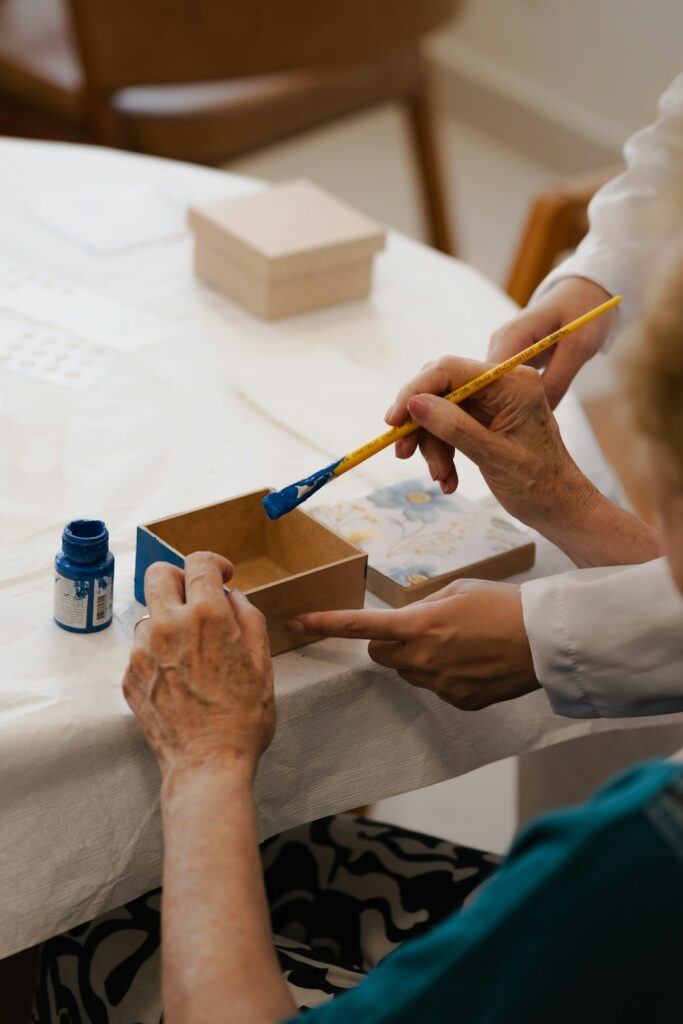
Creative activity remains meaningful throughout later life. In assisted living, art, music, storytelling, gardening, cooking, and other forms of self-expression can support routine, confidence, social connection, and personal identity. Creativity does not depend on artistic training or physical strength. It can be adapted to different abilities, interests, cultures, and stages of memory loss.
For residents and families in Bristol, PA, the most useful approach is to treat creativity as part of daily well-being rather than as an occasional entertainment program.
Why does creativity matter in assisted living?
Creative activities give older adults a way to make choices, express feelings, remember experiences, and connect with other people. The activity itself does not need to produce a polished result. The process of selecting colors, shaping materials, singing a familiar song, or telling a story may be more valuable than the finished product.
Creativity can also provide:
- A sense of purpose and accomplishment
- Opportunities for conversation and friendship
- Gentle mental stimulation
- A familiar routine during transitions
- A way to preserve traditions and personal history
- A positive outlet for stress, grief, boredom, or frustration
Some residents may describe themselves as “not creative.” That often means they do not identify as artists, not that they lack imagination. Activities should be presented as opportunities to explore, remember, or enjoy—not as tests of talent.
What types of creative activities work well for older adults?
The most successful activities are flexible, familiar, and easy to begin. Residents should be able to participate for a few minutes or remain involved for a longer session.
Possible options include:
Visual arts
Painting, drawing, collage, watercolor, and simple printmaking can be adjusted for different levels of hand strength and coordination. Large-handled brushes, thicker pencils, lightweight materials, and nonslip work surfaces may make participation easier.
For residents who do not want to create a picture from scratch, guided choices can help. They might select colors for a seasonal design, arrange photographs into a collage, decorate a greeting card, or add details to a partially completed project.
Music and singing
Music can support mood, memory, and social connection. Group singing, rhythm instruments, listening sessions, and discussions about favorite performers can include people with limited mobility or vision.
Familiar songs from a resident’s young adulthood may encourage participation, but personal preference matters more than age-based assumptions. Some residents may prefer hymns, classical music, folk songs, jazz, country music, or instrumental pieces.
Writing and storytelling
Creative writing does not need to involve long essays. Residents can respond to prompts such as:
- “A meal I remember”
- “A job I once enjoyed”
- “A favorite holiday tradition”
- “A place that felt like home”
- “Advice I would give my younger self”
Staff or family members can write down a resident’s words if holding a pen is difficult. Short oral histories, recorded memories, poems, and family stories can all be meaningful forms of creative expression.
Crafts and textiles
Knitting, crocheting, quilting, paper crafts, beadwork, and simple weaving may be familiar to many residents. Those who can no longer manage detailed handwork may still enjoy choosing colors, sorting materials, feeling different textures, or contributing to a group project.
Projects should avoid unnecessary pressure to finish. A resident may enjoy the sensory experience or conversation even if the item remains incomplete.
Cooking and food traditions
Food-related creativity can include discussing recipes, decorating cookies, assembling fruit arrangements, making no-bake snacks, or sharing memories about family meals. Activities must account for dietary restrictions, swallowing concerns, allergies, and food safety.
Even when a resident cannot cook independently, deciding between ingredients, describing a recipe, or explaining a traditional preparation method can preserve a valued role.
How can activities be adapted for memory loss or physical limitations?
Activities should be modified around the resident’s abilities rather than removing participation altogether. A person with arthritis may enjoy selecting materials or directing another person’s hands. Someone with dementia may respond well to familiar songs, repetitive motions, sorting tasks, or sensory materials.
Helpful adaptations include:
- Offering one or two choices instead of a large selection
- Demonstrating each step slowly
- Using familiar objects and recognizable themes
- Reducing noise and visual clutter
- Providing larger tools and easy-grip materials
- Allowing extra time without correcting mistakes
- Focusing on enjoyment rather than accuracy
- Stopping when the resident appears tired or overwhelmed
A resident who repeats the same action or story may still be engaged. Repetition can provide comfort, rhythm, and a feeling of competence.

How can family members support creativity during visits?
Family visits do not need to center on questions about health, appointments, or daily tasks. A small creative activity can make time together more relaxed and personal.
Families might bring photographs for storytelling, listen to music from a resident’s past, work on a simple seasonal craft, or ask the resident to explain a favorite recipe. A family member can also invite the resident to teach something, such as folding napkins, arranging flowers, identifying birds, or describing a traditional celebration.
For residents living in assisted living, visits may take place indoors during cold, rainy, or very hot weather. Portable projects are useful because they can be completed at a table, in a common room, or beside the resident’s chair without requiring a complicated setup.
The resident should remain the decision-maker whenever possible. Asking, “Would you like to try this?” is more respectful than assuming participation.
What should assisted living staff consider when planning creative programs?
A strong creative program includes variety, choice, and accessibility. Repeating a popular activity can be helpful, but residents should not be expected to enjoy the same format every week.
Planning should consider:
- Vision, hearing, mobility, and dexterity
- Cultural and religious backgrounds
- Former occupations and hobbies
- Interest in individual versus group activities
- Noise sensitivity and attention span
- Seasonal preferences and indoor comfort
- Safe storage and cleanup of materials
Programs should also avoid treating all older adults as having the same interests. A resident who enjoyed gardening may not enjoy painting flowers. Another person may prefer repairing, organizing, decorating, or discussing creative work rather than producing it.
Display practices matter as well. Showing a resident’s work can be encouraging, but permission should be requested first. Some people enjoy public recognition; others prefer to keep their projects private.
What are common mistakes to avoid?
The biggest mistake is placing too much emphasis on the final product. Comparisons, criticism, or correction can make an activity feel like schoolwork rather than an enjoyable experience.
Other problems include:
- Making every activity seasonal or holiday-themed
- Assuming residents want childish crafts
- Giving instructions that are too complicated
- Using materials that are difficult to grip or see
- Moving too quickly between steps
- Treating refusal as a lack of interest rather than possible fatigue, pain, or anxiety
- Asking residents to “make it look right”
Creativity should remain voluntary. A quiet observer may still be participating by listening, watching, remembering, or offering suggestions.
How can creativity become part of everyday life?
Creative living does not require a formal class. A resident might choose the color of a blanket, arrange personal photographs, help select music, care for a small plant, decorate a doorway, or share a family saying. These ordinary choices reinforce independence and identity.
In Bristol, seasonal changes can provide natural prompts for indoor creative activities, including winter storytelling, spring planting, summer nature observations, and autumn color projects. The goal is not to fill every hour with scheduled events. It is to make room for curiosity, personal preference, and meaningful participation throughout the week.